Newsletter Subscribe
Enter your email address below and subscribe to our newsletter

 ByJohn A
Boat interiors require upholstery that combines comfort, durability, and an attractive finish. From salon seating and dinette cushions to cabin benches and sleeping areas, upholstered surfaces contribute to the overall appearance and functionality of a vessel. However, marine environments present specific challenges, including humidity, condensation, temperature changes, and limited ventilation. Choosing suitable upholstery materials and maintaining them correctly can help preserve the interior for longer.
Boat interior upholstery allows boat owners to customise the appearance and functionality of their cabins while accommodating the dimensions and layouts of marine furniture. Material selection, cushion construction, stitching, and fitting all influence the finished result.
Understanding the available upholstery options and recognising when existing materials need attention can help you plan an upgrade that suits your vessel, comfort preferences, and maintenance requirements.
Boat interior upholstery refers to the fabrics, coverings, cushioning, and finishing materials used on seating and other upholstered surfaces inside a vessel. It serves both practical and decorative purposes by improving comfort, protecting cushion cores, and creating a coordinated cabin interior.
Marine interior upholstery must also account for restricted space, irregular furniture shapes, and environmental conditions that differ from those in a typical home.
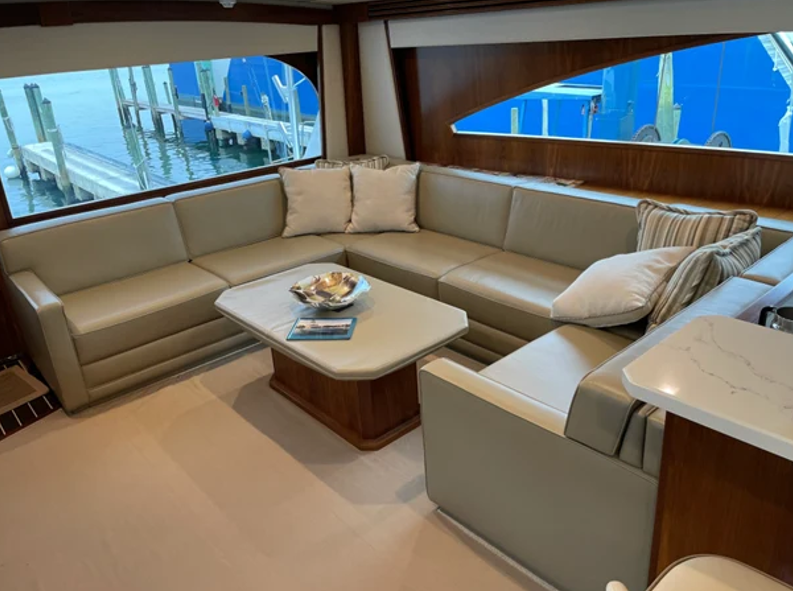
Several areas of a vessel may incorporate upholstered materials. These include salon seating, dinette benches, cabin cushions, V-berth mattresses, backrests, and other built-in seating arrangements.
Each area has different requirements. Seating cushions may need sufficient firmness to support regular use, while berth cushions should provide appropriate comfort for sleeping. Backrests may require softer padding, whereas frequently used seat edges benefit from durable coverings and reinforced construction.
Identifying the purpose of each upholstered surface helps determine the most appropriate combination of fabric, foam, and finishing details.
Interior upholstery is generally selected for comfort, appearance, cleanability, and resistance to the conditions inside an enclosed cabin. Exterior upholstery must typically withstand more direct exposure to sunlight, rain, wind, and other outdoor conditions.
Materials designed for outdoor use may prioritise UV resistance and water resistance, while interior options may offer a wider range of textures, softer finishes, and decorative designs.
Not every marine fabric is suitable for every application. Always check the manufacturer’s specifications before selecting materials for a particular location.
Boat furniture frequently includes curved surfaces, angled corners, tapered seating, and built-in structures that do not match standard furniture dimensions. Poorly fitted upholstery can create wrinkles, uneven seams, exposed edges, or cushions that shift during use.
Custom fitting accounts for the dimensions and shape of the underlying furniture. Accurate measurements also help ensure that cushion covers sit correctly, fasten securely, and maintain the intended appearance.
Upholstery gradually deteriorates through regular use, friction, exposure to sunlight, and moisture. Recognising the signs of wear helps determine whether cleaning, repairs, recovering, or complete replacement is appropriate.
Fading may occur when upholstery is exposed to sunlight through cabin windows or skylights. Vinyl can become stiff or develop cracks, while fabric coverings may show thinning, discolouration, or surface damage.
Minor surface dirt may respond to suitable cleaning, but deep cracks and extensive material deterioration generally require more substantial attention. Damaged coverings can also expose the cushion core to moisture and further wear.
Cushions that remain compressed after use may have lost some of their resilience. Foam deterioration can make seating uncomfortable and create an uneven surface.
Replacing the outer cover alone will not resolve a problem caused by worn foam. Assessing the cushion core helps establish whether new upholstery, replacement foam, or a complete cushion rebuild is necessary.
Loose stitching, separated seams, broken fasteners, and damaged panels can affect both appearance and functionality. Small seam problems may be repairable if the surrounding material remains strong.
When damage extends across multiple sections, replacing the affected covering may be more practical. Inspect the areas around seams and attachment points because these locations often experience repeated stress.
An upholstery upgrade can refresh a cabin without requiring extensive changes to the boat’s furniture. Updated colours, coordinated textures, and cleaner finishing details can make the interior feel more cohesive.
When selecting a new design, consider the existing cabinetry, flooring, wall coverings, and lighting. A consistent palette helps create visual balance while allowing individual seating and sleeping areas to retain their distinct functions.
Material selection affects how upholstery feels, performs, and ages. Consider the intended use of each surface, the cabin’s environmental conditions, and the level of maintenance you can reasonably provide.
Marine vinyl is a popular option because it is generally easy to wipe clean and is available in a range of colours, textures, and finishes. Its suitability depends on the product’s construction, surface treatment, and intended application.
Performance fabrics offer alternatives for boat interiors where a textile appearance and comfortable feel are priorities. Depending on their specifications, these fabrics may offer stain resistance, improved cleanability, or moisture management.
Before choosing either option, review the manufacturer’s care instructions and confirm whether the material is designed for marine interior use.
Ultraleather is a branded category of upholstery material commonly associated with a leather-like appearance and a soft hand feel. Such materials may be considered when a refined finish and practical maintenance are important.
Other options include woven upholstery fabrics, textured synthetic materials, and specialised marine textiles. Each has different characteristics in terms of breathability, abrasion resistance, cleaning requirements, and appearance.
For information about available interior upholstery choices and customisation possibilities, visit Canvas Designers. Compare material specifications carefully to ensure that the selected option meets your vessel’s requirements.
Foam plays a major role in the comfort and performance of upholstered seating. Its density, firmness, resilience, and thickness affect how a cushion supports the body and responds to repeated use.
Higher-density foam often offers better resistance to wear than lower-density alternatives of comparable construction, although density alone does not determine firmness or overall quality. The appropriate specification depends on the cushion’s purpose and expected load.
Seat cushions may require a different balance of firmness and resilience from backrests or sleeping cushions. Consider the support structure beneath the foam as well, because an unsuitable base can affect comfort and cushion longevity.
Marine upholstery should be compatible with the conditions inside the cabin. Condensation, damp clothing, spills, and limited ventilation can introduce moisture that affects both coverings and cushion cores.
Look for materials with suitable abrasion resistance and clear cleaning instructions. Moisture-resistant coverings may simplify maintenance, but they do not automatically make the entire cushion waterproof.
Check whether the material tolerates the cleaning products you intend to use. Regular inspection, prompt spill removal, and adequate cabin ventilation can help reduce deterioration and unpleasant odours.
Upholstery design influences the atmosphere of a boat’s interior as well as the usability of its seating and sleeping areas. A successful design should complement the vessel’s layout while providing appropriate comfort and practical maintenance.
Salon seating and dinette cushions are often among the most frequently used upholstered surfaces. They benefit from durable coverings, supportive foam, and construction that allows cushions to retain their shape.
Colour selection should consider cabin lighting and the surrounding finishes. Neutral shades can provide a versatile foundation, while contrasting piping or carefully selected accent colours can introduce visual interest without overwhelming a compact interior.
V-berths and cabin sleeping areas often have tapered or irregular shapes. Upholstery must follow these dimensions closely to prevent gaps, bunching, and uneven edges.
The cushion design should also account for mattress thickness, removable sections, and access to storage beneath the berth. Breathable construction and appropriate moisture management are particularly important in enclosed sleeping areas.
Decorative details can distinguish an upholstery design without changing the underlying furniture structure. Options may include contrast stitching, quilted sections, piping, smooth panels, and coordinated seams.
The design should remain appropriate for the intended use. Deep quilting or elaborate seams may require additional cleaning attention, while simpler panels can offer a streamlined appearance and easier maintenance.
Stitching quality is also important because seams experience stress whenever cushions are compressed or moved. Ask about seam construction and reinforcement when selecting upholstery for frequently used seating.
Coordinating seating upholstery with bedding, curtains, headliners, and other soft furnishings helps establish a consistent interior style. Matching every surface exactly is not necessary; complementary colours and textures can create a more balanced finish.
Consider the size and lighting of the cabin when choosing colours. Lighter shades may help a small interior feel more open, while darker tones can introduce contrast. Material practicality should remain a priority, particularly in areas exposed to frequent contact.
The decision to recover or replace upholstery depends on the condition of the existing material, the cushion core, and the underlying construction. Evaluating these components separately can help identify the most appropriate approach.
Recovering may be suitable when the foam retains its shape, provides adequate support, and shows no significant signs of deterioration. Replacing the outer material can refresh the appearance while preserving the existing cushion structure.
However, the dimensions and construction should be checked before reusing the core. Foam that has become brittle, compressed, or damaged by moisture may not provide a suitable foundation for new upholstery.
Replacement is often worth considering when cushions have persistent sagging, uneven support, damaged foam, or moisture-related deterioration. The cushion base, fasteners, and supporting structure should also be inspected.
A complete rebuild may involve replacing the foam, creating new covers, adjusting dimensions, or modifying the internal construction. Addressing these issues together can provide a more consistent result than replacing only the visible covering.
Project costs depend on the quantity of upholstery, material selection, foam requirements, cushion complexity, and the amount of preparation or repair needed. Irregular shapes and detailed stitching may require additional fabrication work.
The condition of existing cushions also affects the scope. Request a clear breakdown of material, labour, foam replacement, and any additional work so that different options can be compared fairly.
Careful planning helps ensure that the final upholstery meets the vessel’s functional and design requirements. Establishing the project scope before fabrication can reduce measurement errors, unnecessary changes, and unexpected expenses.
Inspect every upholstered area for surface damage, loose seams, compressed foam, and signs of moisture. Determine which cushions can be retained and which need recovering, repair, or complete replacement.
Record the dimensions of each section and note any unusual shapes, fastening arrangements, or access requirements. Clear documentation makes it easier to communicate the intended result and identify potential fitting challenges.
Choose materials based on comfort, durability, appearance, and cleaning requirements. Confirm that each fabric or covering is appropriate for its intended location and compatible with the selected cushion construction.
Consider how colours and finishes will work with the boat’s existing interior. Reviewing material samples, where available, can help you assess texture and appearance under the cabin’s actual lighting conditions.
Accurate measurements are essential for upholstery that fits built-in furniture and irregular cabin layouts. Provide clear dimensions, photographs where requested, and templates for complex shapes.
Confirm the material specifications, foam requirements, seam details, fastening methods, and expected completion timeframe before work begins. Also establish how the finished cushions will be delivered and fitted into the vessel. For further information about upholstery options, custom requirements, or ordering details, please use the contact page to submit your enquiry.
Routine maintenance helps preserve the appearance and usability of marine upholstery. Remove dust and spills promptly, use cleaning products approved for the selected material, and avoid harsh chemicals that may damage protective finishes.
Allow damp cushions to dry thoroughly and improve ventilation when the cabin is closed for extended periods. Inspect seams, fasteners, and cushion undersides periodically so that small issues can be addressed before they become more extensive.
The best fabric depends on the location, expected use, desired appearance, and cleaning requirements. Marine vinyl is generally easy to wipe clean, while suitable performance fabrics offer a textile finish. Check the product specifications to confirm that the material is appropriate for interior marine applications.
Yes. Boat cabin cushions can often be reupholstered if their existing cores remain in good condition. If the foam is compressed, damaged, or affected by moisture, replacing the foam alongside the covering may provide a better result.
Marine upholstery must account for conditions such as humidity, condensation, restricted ventilation, and, in some areas, exposure to sunlight or salt. Material suitability, moisture management, and custom fitting are therefore important considerations when choosing upholstery for a boat.
Follow the manufacturer’s cleaning instructions, remove spills promptly, and use compatible cleaning products. Keep the cabin ventilated, allow damp cushions to dry thoroughly, and inspect seams and cushion undersides regularly to identify early signs of damage.
Review the provider’s experience with marine interiors, familiarity with custom cushion shapes, material options, and approach to measurements. Ask for clear specifications, a project estimate, details about foam and stitching, and an expected timeframe before confirming the work.
Boat interior upholstery plays an important role in cabin comfort, appearance, and everyday functionality. Selecting suitable materials, supportive foam, and accurate custom fitting helps ensure that upholstered surfaces meet the demands of a marine environment.
Before starting an upgrade, assess the condition of the existing cushions, identify any structural or fitting issues, and compare materials according to their durability, maintenance requirements, and appearance. Decide whether recovering or replacing the upholstery is the most appropriate option for each area.
With careful planning and regular maintenance, well-chosen marine upholstery can help maintain a comfortable, attractive, and practical boat interior for years to come.