Newsletter Subscribe
Enter your email address below and subscribe to our newsletter

 ByJohn A
Choosing the right shade pole material can make a difference in how easily a marine shade system can be installed, handled, and maintained. Boat owners need supports that suit their vessel, provide appropriate structural performance, and withstand exposure to moisture, sunlight, and saltwater conditions. Carbon fiber shade poles are worth considering because of their lightweight construction, stiffness, and resistance to corrosion.
However, selecting a suitable pole involves more than comparing materials. Dimensions, mounting compatibility, hardware quality, fabric attachment, and intended operating conditions all influence the performance of a complete shade system. Understanding these factors can help boat owners make an informed purchasing decision.
If you are exploring lightweight marine shade supports, a carbon fiber shade pole can be a useful option to evaluate for your boat’s coverage requirements.
A carbon fiber shade pole is a support component made from carbon fiber composite material. It is designed to hold shade fabric in position as part of a compatible shade system. In marine applications, the pole must work with appropriate mounting hardware, attachment points, and fabric tensioning arrangements.
Carbon fiber composites combine carbon fibers with a resin matrix. The fibers contribute stiffness and strength, while the resin binds them together to form the finished structure. The properties of the final pole depend on its design, fiber orientation, construction method, and dimensions.
Carbon fiber is valued in applications where low weight and stiffness are important. The fibers are arranged within a resin matrix to create a composite structure engineered for particular loading requirements.
Unlike a solid metal rod, a carbon fiber pole may use a hollow tubular construction to reduce weight while providing the required rigidity. However, performance varies according to wall thickness, diameter, fiber arrangement, and manufacturing quality.
When comparing products, look beyond the material name. Specifications and manufacturer guidance provide a clearer understanding of whether a pole is suitable for the intended marine shade application.
Shade poles help establish the height and position of a fabric panel. Their dimensions and mounting positions influence the available coverage area and the amount of tension applied to the fabric.
A compatible system may use rod holders, base inserts, cleats, attachment points, or tensioning lines. These components must work together to maintain the intended arrangement.
Correct installation is essential because wind loads and fabric tension can place stress on the poles and mounting points. Always follow the manufacturer’s instructions and operating limits.
Carbon fiber shade poles may be used in removable marine shade systems for center console boats, fishing boats, and other vessels with compatible mounting arrangements.
They can also extend shade beyond an existing T-top or hardtop when the system is designed for that configuration. The suitability of a particular product depends on its dimensions, fittings, and intended application.
Carbon fiber offers several properties that can be useful in marine shade applications. The benefits depend on the quality of the pole and the design of the complete system.
One of the main advantages of carbon fiber is its low weight relative to its stiffness. A lightweight pole can be easier to lift, position, remove, and store than a heavier alternative with comparable dimensions.
This can be particularly useful for removable shade systems that need to be taken down after use. Lower component weight may also make storage and transportation more convenient.
However, the actual weight difference depends on the dimensions and construction of the products being compared. Check published specifications rather than assuming that every carbon fiber pole is lighter than every aluminum option.
Carbon fiber composites can provide high stiffness, helping a pole maintain its shape under suitable loads. This property matters when supporting fabric that must remain positioned above a deck.
Nevertheless, stiffness does not mean that a pole is indestructible. Carbon fiber components can be damaged by impacts, crushing forces, or loads beyond their design limits.
Pole diameter, wall thickness, fiber orientation, mounting conditions, and fabric tension all affect structural performance. Choose a product intended for the relevant shade application.
Unlike many metals, carbon fiber does not rust. This makes it attractive for marine equipment exposed to moisture and saltwater.
However, a carbon fiber pole may still have metal fittings, fasteners, cleats, or inserts that require corrosion protection. Contact between dissimilar materials can also introduce compatibility concerns.
Rinsing components after saltwater exposure and following the manufacturer’s maintenance guidance can help preserve the complete system.
Lightweight construction can make removable shade equipment more manageable during installation and removal. This is useful when the shade needs to be stored separately from the boat.
Convenience also depends on the mounting design, number of components, adjustment mechanisms, and storage requirements. Before buying, check how the poles connect to the boat and whether the complete system can be handled comfortably.
Carbon fiber and aluminum are both used in applications where structural support is needed, but they have different properties. The right choice depends on the vessel, budget, handling preferences, and operating requirements.
Carbon fiber is generally known for its high stiffness relative to its weight. Aluminum can also provide an effective balance of weight and strength, depending on the alloy and construction.
For removable shade systems, compare the actual weight of poles with equivalent lengths and intended uses. A product’s diameter and wall thickness can influence handling just as much as its base material.
Carbon fiber does not rust, but its composite structure can be vulnerable to impact damage. Aluminum does not rust in the same way as iron, although it can corrode in marine environments if its protective finish or maintenance is inadequate.
The durability of either material depends on its construction, surface condition, hardware, and exposure to operating loads.
Carbon fiber poles may have a higher purchase price because of material and manufacturing costs. Aluminum alternatives may offer a more economical starting point, depending on their specifications.
Long-term ownership costs also depend on maintenance, replacement parts, storage, and product lifespan. Consider the total system rather than evaluating pole material alone.
The following table summarizes the main considerations when comparing the two materials.
| Factor | Carbon Fiber | Aluminum |
| Weight | Often lightweight for its stiffness | Varies by alloy and construction |
| Corrosion | Does not rust, but fittings need care | Can corrode in marine conditions |
| Cost | May have a higher initial price | Available at different price points |
| Maintenance | Inspect for impact damage and fitting wear | Inspect finishes, corrosion, and fittings |
| Handling | Can be convenient for removable systems | Depends on pole weight and design |
| Applications | Suitable for compatible lightweight shade systems | Suitable for many marine shade applications |
Neither material is automatically the best choice for every boat. Compare product specifications, mounting compatibility, and manufacturer recommendations before deciding.
When comparing marine shade pole options, consider the materials, construction, and suitability for your vessel. Sunfly Poles offers carbon fiber and aluminum shade poles designed for marine applications, with fixed-length options and mounting systems intended for compatible standard rod holders. Reviewing the available configurations can help you identify a system that matches your coverage requirements and preferred setup.
A suitable pole must match the dimensions and requirements of the complete shade system. Reviewing the following details can help prevent fitting problems and unsuitable purchases.
Pole length affects shade height and coverage, while diameter determines whether the pole fits the intended mounting arrangement.
For example, the available Sunfly Poles range includes fixed 6-foot and 8-foot pairs with a 1.5-inch diameter designed for compatible standard rod holders. These dimensions provide a useful starting point, but you should confirm the specifications of the selected product and the measurements of your boat’s rod holders before ordering.
Check insertion depth, retention requirements, and the position of nearby equipment. Do not assume that poles from different manufacturers are interchangeable.
The quality of the fittings matters because they connect the poles to the boat and help secure the shade fabric. Look for clear information about materials, finishes, fastening methods, and maintenance requirements.
For marine applications, corrosion-resistant hardware is an important consideration. Follow the manufacturer’s guidance when connecting metal fittings to carbon fiber, and avoid modifications that could damage the composite structure.
The pole system should work with the fabric attachment points and tensioning arrangement. Incorrect tension can cause the fabric to sag or place excessive stress on the supports.
Check how the fabric connects to the poles, whether adjustments are available, and how the system is secured. Some systems use a pulley fitting and cam cleat to help tension and secure the fabric.
The complete configuration should suit the intended coverage area and operating conditions.
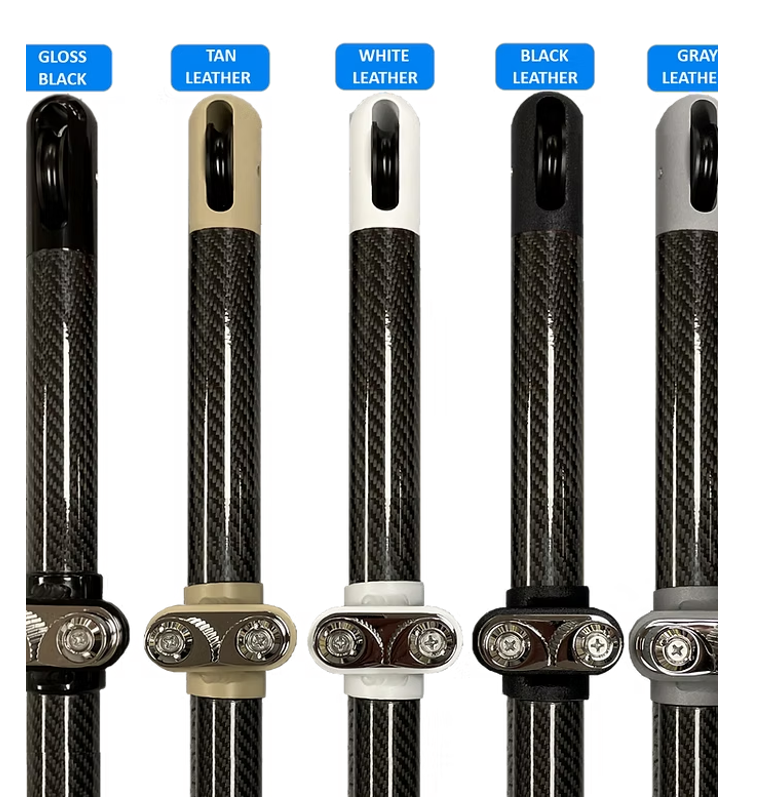
Surface finishes can influence appearance, cleaning, and protection from environmental exposure. Some carbon fiber shade poles use anodized aluminum fittings, while other configurations feature powder-coated finishes.
Review the manufacturer’s care instructions for the pole and its fittings. Also consider whether the system requires particular cleaning products or protective measures. Proper maintenance is important even when the primary pole material is corrosion resistant.
Routine inspection and appropriate storage can help maintain the condition of carbon fiber shade poles. Follow the product-specific care instructions rather than relying on general assumptions about composite materials.
Rinse the poles and compatible hardware with fresh water to remove salt residue and other deposits. Use a mild cleaning method approved by the manufacturer and avoid abrasive materials that could damage the finish.
Allow the components to dry appropriately before storage, particularly around fittings and connection points.
Check the poles for cracks, visible impact damage, surface deterioration, or other unusual changes. Inspect cleats, fasteners, lines, and mounting hardware for looseness and wear.
Pay particular attention to metal fittings that may be exposed to saltwater. Replace damaged components according to the manufacturer’s recommendations and discontinue use if structural damage is suspected.
Carbon fiber poles should be protected from impacts, crushing, and unnecessary abrasion. Store them in a suitable location where they cannot roll, fall, or become trapped under heavy equipment.
Use the recommended storage method and avoid placing loads on the poles. Before reinstalling a stored system, inspect its condition and confirm that all components remain secure.
Carbon fiber shade poles can be suitable when low weight, stiffness, and corrosion resistance are priorities. However, the final decision should reflect the boat’s layout and the requirements of the complete shade system.
Center console and fishing boats often require shade solutions that preserve casting space and access to rod holders. A compatible removable pole system may help extend coverage while maintaining access to essential deck areas.
Check the mounting positions, fabric dimensions, and clearance required for normal activities before selecting a configuration. The system should also be appropriate for the boat’s operating conditions.
An existing T-top or hardtop may leave some areas exposed. A compatible shade extension can provide additional coverage if the supporting structure and mounting arrangements are suitable.
Confirm that the selected system is designed for the intended installation. Do not assume that an existing top can safely accommodate additional loads without manufacturer approval.
Larger vessels may require different pole dimensions, mounting arrangements, and coverage configurations. Wind exposure, structural support, and the area of fabric being supported should be considered carefully.
Some larger-vessel configurations may use a topping lift pole to raise the center of a shade panel, improving clearance or helping water run off the fabric. Consult the product specifications and manufacturer guidance to establish whether the selected system is appropriate for the vessel.
Carbon fiber offers a favorable stiffness-to-weight ratio and does not rust, while aluminum can provide a practical and cost-effective alternative. The better option depends on the product’s construction, price, mounting requirements, and intended use.
Carbon fiber itself does not rust, but associated metal fittings and fasteners can corrode. Regular rinsing, inspection, and appropriate hardware maintenance remain important for marine use.
The required length depends on the mounting height, desired shade coverage, fabric dimensions, and boat layout. Fixed 6-foot and 8-foot options are available in the Sunfly range, but you should measure the intended installation area and follow the manufacturer’s sizing guidance.
Clean and dry the poles as directed, then store them in a protected location away from heavy loads and impacts. A suitable storage bag can help reduce scratches and surface damage. Inspect the poles and fittings before reinstalling them.
No. Compatibility depends on the pole dimensions, mounting arrangement, vessel layout, and intended application. Verify the manufacturer’s specifications before purchasing a system.
Carbon fiber shade poles offer several advantages for marine shade applications, including lightweight construction, stiffness, and resistance to rust. These properties can make them a practical option for removable shade systems on compatible boats.
However, material alone does not determine performance. Pole dimensions, mounting compatibility, fitting quality, fabric tension, and safe operating conditions are equally important when choosing a complete setup.
Review the available carbon fiber shade pole options and compare their specifications with your vessel’s requirements. If you need clarification about compatibility or product selection, visit the contact page for assistance.