Newsletter Subscribe
Enter your email address below and subscribe to our newsletter

 ByJohn A
A purchase order for tubes that only says “309” grade can lead to a discussion about more than one product. This grade comes in three common versions, and they differ mainly in their carbon content. That small number on the material paperwork affects how the tube welds, how it holds up under load at high heat, and which specification it falls under. Engineers who leave a vague line on a drawing sometimes find out later, perhaps when a weld procedure doesn’t match the material that arrived.
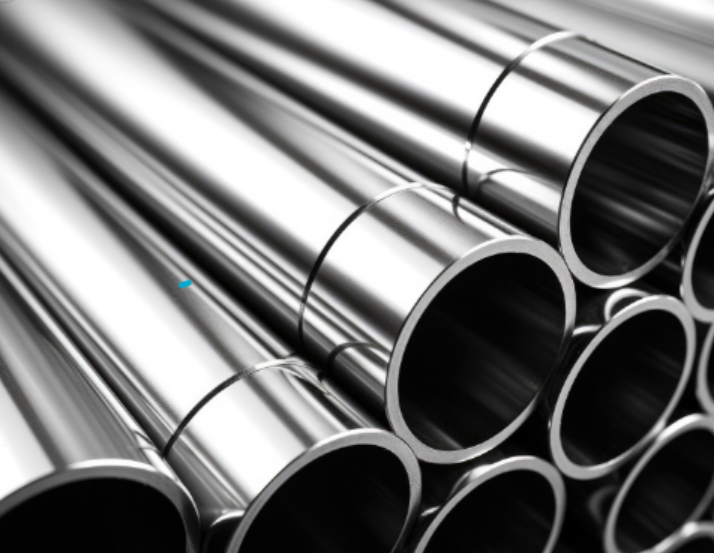
A 309 stainless steel tube is an austenitic chromium-nickel product made for service where heat is the main concern. Its chemistry sits around 22 to 24 percent chromium and 12 to 15 per cent nickel, well above the 18 and 8 found in 304. That extra alloy content lets the tube resist scaling in air up to roughly 1,900°F to 2,000°F (about 1,040°C to 1,090°C) in continuous service. The limit drops somewhat when the equipment heats and cools on a repeating cycle.
Carbon Content Separates 309, 309S, and 309H Tubing
Standard 309 allows up to 0.20 per cent carbon. 309S caps carbon at 0.08 percent, making it easier to weld and lowering the chance of carbides forming along grain boundaries near the weld. 309H contains 0.04 to 0.10 percent carbon. That higher minimum provides better creep strength, so designers often call for it when a tube carries a load at high temperature for long periods. In tubing, 309S is the version most buyers end up with, though the right choice depends on the part’s application.
How Thermal Expansion Affects 309 Tube Layout
One detail often gets missed but deserves its own mention: how much the tube expands when it heats up. Austenitic stainless steels have a higher coefficient of thermal expansion than carbon steel, about 40 per cent higher over a typical working range. A long run of 309 tubing inside a furnace can lengthen noticeably between a cold start and full temperature. Supports, bends, and expansion loops need room for that movement, or the stress tends to show up at the welds and fittings.
Furnace Atmosphere Matters as Much as Temperature
Temperature is only part of the question, and the gas around the tube decides a lot. In clean, oxidizing air, 309 forms a tight chromium oxide layer that protects the metal underneath. In carbon-rich atmospheres, such as some heat-treating furnaces, the tube can absorb carbon through a process called carburization. Over time, this makes the metal near the surface harder and more brittle. 309 handles mild carburizing conditions reasonably well, but heavier exposure may call for a higher nickel alloy. Sulfur-bearing gases bring their own concerns, which is a separate topic for another post.
Common Uses for 309 Stainless Tubing
The grade shows up in equipment that runs hot for long stretches. Typical uses include:
Is 309 the right answer in every hot application? In most cases, it works well, though not always. For temperatures closer to 2,100°F, 310S often makes more sense because of its higher chromium and nickel. For moderate heat combined with wet corrosion, 316 may perform better.
ASTM Specifications for 309 Stainless Steel Tubing
Seamless 309 tubing for boilers, superheaters, and heat exchangers is commonly ordered to ASTM A213, listed as TP309S or TP309H. Welded tubing for similar service falls under ASTM A249. ASTM A312 covers pipe sizes. A clear order states the grade, the specification, outside diameter, wall thickness, length, and whether the tube is seamless or welded.
Mill test reports are tied to the actual heat of material, so they come with the order after it is placed. If a mill must produce the material, the report doesn’t exist until that production run is complete.
Next Steps When Sourcing 309 Tube
Start with three facts about the application: the operating temperature, the furnace atmosphere, and whether the tube carries a structural load. Those answers usually point toward 309S, 309H, or a different grade altogether. After that, match the size and specification to the drawing. A distributor that stocks heat-resistant stainless tubing in standard sizes can supply the correct grade and provide the accompanying documentation once the order is in place.