Newsletter Subscribe
Enter your email address below and subscribe to our newsletter

 ByJohn A
A silver chain bracelet can add a refined detail to a man’s everyday wardrobe without demanding much attention. Its cool metallic finish works with casual clothing, office outfits and evening wear, making it a practical choice for men who prefer accessories they can wear in different settings. From slim curb chains to heavier link designs, there are plenty of options to suit different tastes.
A good purchase involves more than choosing an attractive design. When selecting a silver bracelet chain for men, metal quality, bracelet length, link construction, clasp security, and comfort all affect how the piece looks and performs over time. Understanding these details makes it easier to choose a bracelet that suits both personal style and everyday needs.
Silver bracelets come in different materials and finishes, so checking the product description should be an early step. Sterling silver is one of the most common choices for quality silver jewellery. It typically contains 92.5% silver, with the remaining portion consisting mainly of other metals that improve durability.
Sterling silver is often marked with a 925 stamp. This marking can help identify the stated purity, although buyers should also consider the seller’s reputation and any available authenticity documentation.
Fine silver contains a higher proportion of pure silver but is relatively soft for jewellery that receives regular knocks and friction. Sterling silver is generally more practical for chain bracelets because its alloy provides greater strength.
Silver-plated bracelets have a different structure. They use a base metal coated with a layer of silver. The finish may gradually wear, particularly around links and clasp contact points. These bracelets can offer an affordable appearance, but they should not be confused with solid sterling silver.
The chain pattern influences the bracelet’s overall character. Curb chains have flattened, closely connected links that create a clean, familiar appearance. They suit men who want a bracelet that can be worn with T-shirts, shirts and jackets.
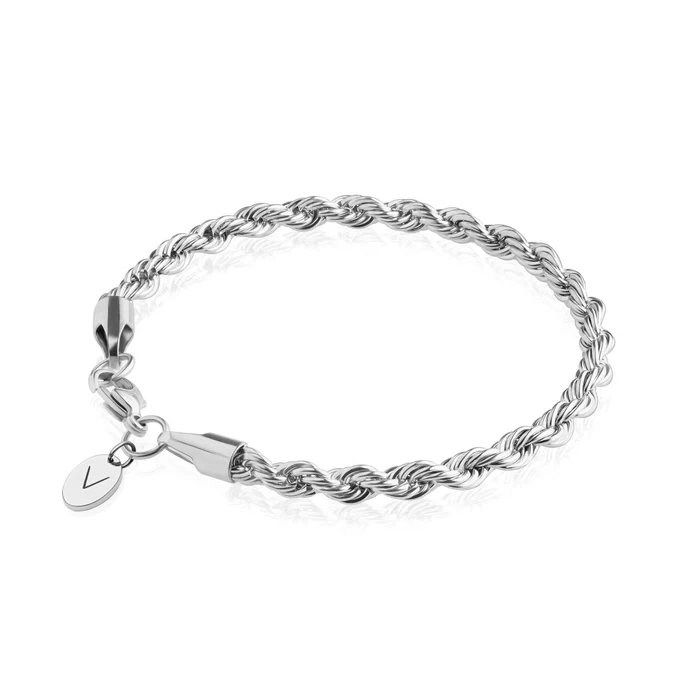
Figaro chains alternate shorter links with longer ones, producing a more decorative pattern. Rope chains twist smaller links together to create a textured surface, while box chains use square-shaped links for a more geometric finish.
A slim bracelet usually feels understated and works well with minimalist clothing. Medium-width designs provide greater visibility without dominating an outfit. Chunkier bracelets suit men who prefer substantial accessories and often work best when the rest of the wrist is kept relatively simple.
Think about the jewellery and clothing already in regular use. A bracelet that complements a favourite watch, belt buckle or necklace is more likely to become a consistent part of the wardrobe.
Correct sizing affects both comfort and appearance. A bracelet that is too tight can restrict movement and leave uncomfortable pressure marks. One that is too loose may slide over the hand, catch on clothing or feel distracting throughout the day.
Measure around the wrist with a flexible tape, positioning it where the bracelet will normally sit. If using a piece of string, mark the point where the ends meet and measure the string against a ruler.
The finished bracelet usually needs some additional room beyond the wrist measurement. The amount depends on the chain’s thickness, weight and preferred fit. A slim chain may sit comfortably with less movement, while a heavier design often benefits from a little extra space.
Always consult the seller’s sizing guide. Some retailers list the total bracelet length, while others provide a suggested wrist measurement. These figures are not necessarily interchangeable.
A bracelet’s clasp deserves as much attention as its visible design. Lobster clasps are popular because they use a spring-loaded mechanism that can provide a secure closure. Spring-ring clasps are another option, particularly on lighter chains.
Box clasps can offer a neat appearance and are often used on more substantial jewellery. Their security depends on the quality of the mechanism and how well it fits together. A safety catch may provide additional protection on some designs.
Check that the clasp opens and closes smoothly without feeling loose. The connecting rings should be properly secured, and the links should have consistent shapes without sharp edges or obvious gaps.
For a heavier silver chain bracelet, construction becomes particularly important. The bracelet may experience repeated movement against a desk, clothing or other accessories. Well-finished links and a dependable clasp help reduce the likelihood of accidental loss.
The weight of a bracelet affects how noticeable it feels during normal activities. Lightweight chains are often suitable for people who type frequently, work with their hands or prefer jewellery that stays in the background.
Heavier bracelets create a more substantial appearance, but they can move around more noticeably. Try to balance the desired visual effect with comfort, especially if the bracelet will be worn for long periods.
The shape of the links also matters. Smooth, rounded edges are generally more comfortable than rough or poorly finished connections. A bracelet should not pinch the skin, pull arm hair excessively or catch repeatedly on shirt cuffs.
Consider work requirements as well. Jewellery may need to be removed around machinery, during certain physical tasks or in environments where accessories could become a safety hazard.
Polished sterling silver has a bright, reflective surface that suits dress shirts, evening outfits and simple casual clothing. Its shine makes the bracelet more noticeable, particularly in natural light.
Matte and brushed finishes provide a quieter appearance. They can work well with textured fabrics, denim and relaxed everyday clothing. Oxidised silver, which has darker details in selected areas, creates contrast and gives chain patterns greater definition.
Some men prefer a single silver accessory, while others combine a bracelet with a watch or necklace. Matching every metal finish is not essential, but a degree of consistency can make the overall look feel deliberate.
For example, a polished silver bracelet can complement a stainless-steel watch. A darker silver chain may pair naturally with a black leather strap or other understated accessories.
Sterling silver can tarnish as it reacts with substances in the surrounding environment. This is a normal characteristic of silver rather than proof that the bracelet is poor quality.
Sweat, moisture, cosmetics and some household chemicals may affect the surface. Removing the bracelet before swimming, cleaning or applying personal-care products can help reduce unnecessary exposure.
Use a soft jewellery cloth for routine cleaning. A suitable silver-cleaning product may help with tarnish, but follow the manufacturer’s instructions and avoid applying abrasive treatments to plated or specially finished pieces.
Store the bracelet in a dry place, ideally in a separate pouch or jewellery compartment. Keeping it away from damp conditions and direct contact with other metal accessories helps limit scratches and surface marks.
Price differences often reflect material, weight, craftsmanship, brand positioning and design details. A heavier sterling silver bracelet will generally use more metal than a very fine chain, but weight alone does not establish quality.
Check the stated metal content, dimensions, return policy and warranty before purchasing. Product photographs can make bracelets appear larger or more substantial than they are, so measurements provide a more reliable basis for comparison.
A cheaper plated bracelet may suit occasional use, while a sterling silver design may be preferable for frequent wear. The right decision depends on the intended use rather than price alone.
A silver chain bracelet should feel comfortable, suit the wearer’s clothing and provide confidence in its materials and construction. Checking the metal, measuring the wrist, examining the clasp and choosing an appropriate weight can prevent many common buying mistakes.
A straightforward curb chain may offer the greatest versatility, while a rope, Figaro or box chain provides a more individual appearance. By comparing these practical details before ordering, men can choose a silver bracelet that fits their personal style and everyday routine.